Europe’s Living Rooms
In collaboration with HEINEKEN, Magnum photographers take us on a journey through bars in 11 European countries, exploring their function as hubs for social connection

In Ray Oldenburg’s 1989 book The Great Good Place, he defends the concept of “third places”: essential spaces, separate from home and work, that foster social interactions and a sense of community. According to Oldenburg, these “anchors” of social life must be open and inviting, unpretentious and informal — no invitation required. They are, in fact, Oldenburg argues, one of the foundations of a functioning democracy; Parisian cafés and bars were clandestine establishments for the French Resistance during the Nazi occupation, and the Stonewall Inn uprising was a milestone for gay rights in America.
In an age of online interactions and homogeneous “non-places” — Marc Augé’s term for spaces where people are anonymous and interactions are few, such as shopping malls, hotel rooms and airports — bars, pubs and cafés are perhaps more crucial than ever before. Very often, they keep communities afloat.
HEINEKEN’s latest project, Europe’s Living Rooms, invited Magnum photographers to capture the atmosphere in bars, pubs, and restaurants in 11 European countries. Coinciding with “European Beer Month” in October, the project takes a closer look at the value of these spaces for people from all walks of life. Each venue has its own rhythm and cultural nuance, yet their function remains the same: a space to uphold the ritual of bringing people together.
Mark Power
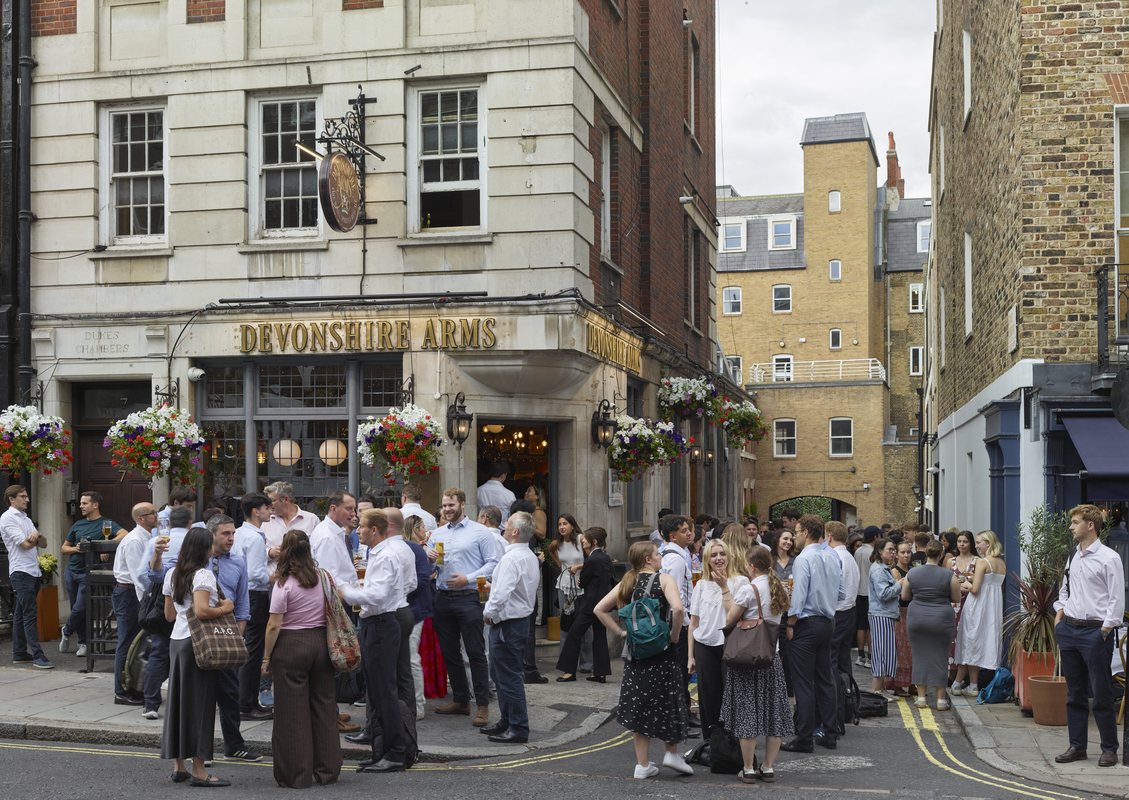
Devonshire Arms, London, England
“You can’t beat a British pub,” says Mark Power. “In Britain you simply walk into a pub, order at the bar, stay where you are or take your drink to a table, and in less than a minute you’re enjoying your chosen tipple. Unbeatable.
“Like most things in life, many pubs aren’t what they used to be. But the Devonshire Arms, hidden away in London’s Marylebone District, is still what we might refer to as a ‘traditional’ pub. It doesn’t serve food, it doesn’t have slot machines, it doesn’t play loud, awful music. It only serves drinks and very tasty fish-flavoured snacks. It’s a place to meet and chat quietly over decent beer. It’s cozy too, small inside, which is why it feels slightly odd that at least 200 people gather outside every Thursday evening during the summer.
“Because I don’t have a proper job, I had to have it explained to me that Thursday is the new Friday in the UK, because most people now work from home on the last day of the week. I was also told that, on a Thursday, people start to gather outside the Devonshire Arms from 3:30 (don’t these people have work to do!) and that, within an hour, it would be absolutely rammed outside. So I duly turned up on a Thursday in late July and that’s exactly what happened.
“I’m positioned on the other side of the street with my large format camera, on a tripod, pointing back towards the pub. I’ve never understood why, but when I use equipment like this I always seem to become invisible. […] It’s strange, because the camera is so big and obvious, but it happens every time.”
"You can’t beat a British pub."
- Mark Power
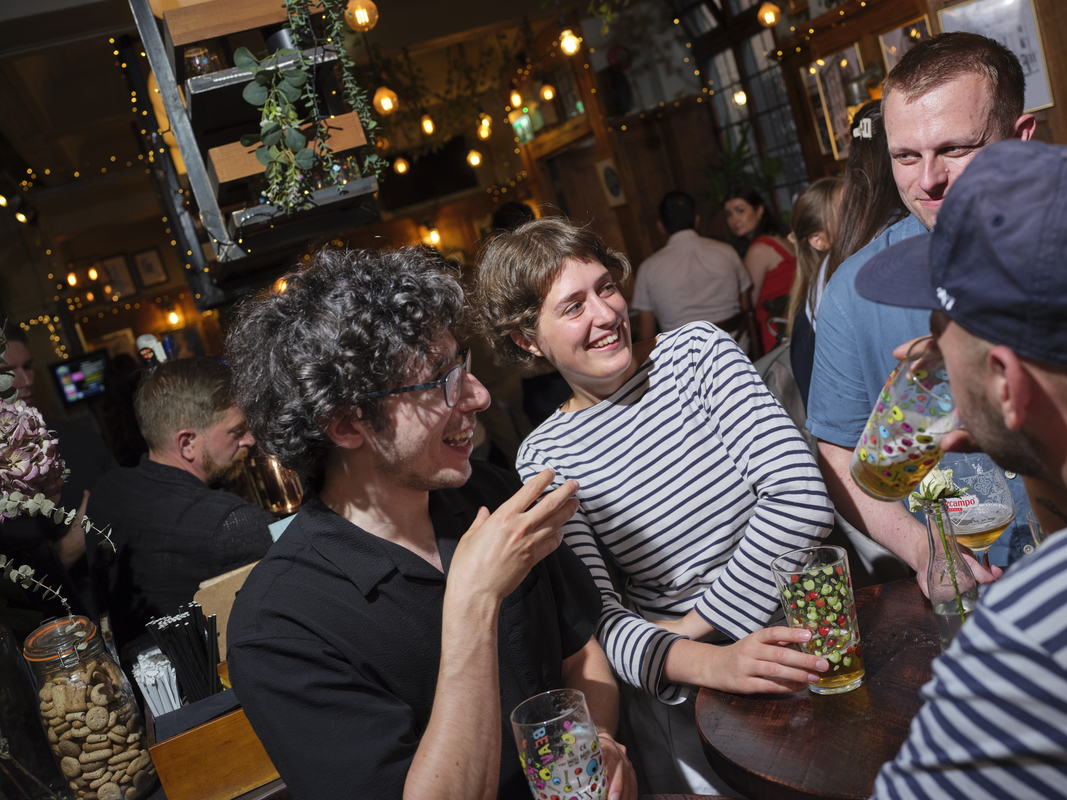
Enri Canaj
Campo Solar, Damme, Belgium
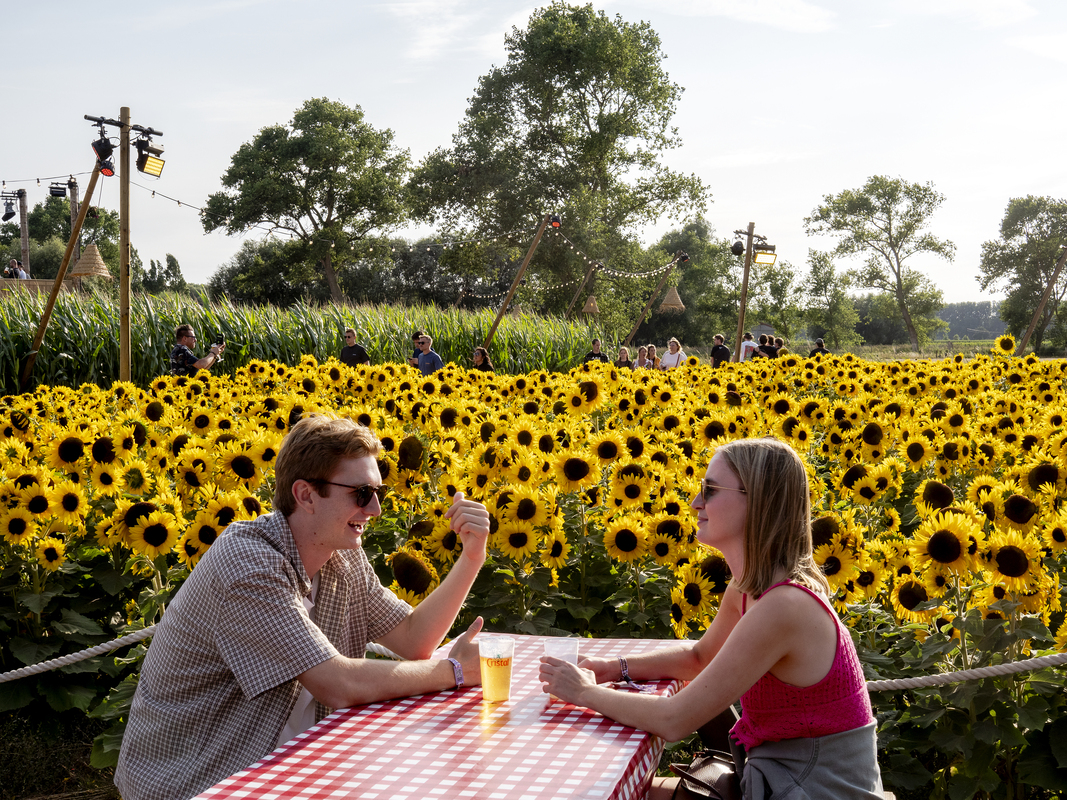
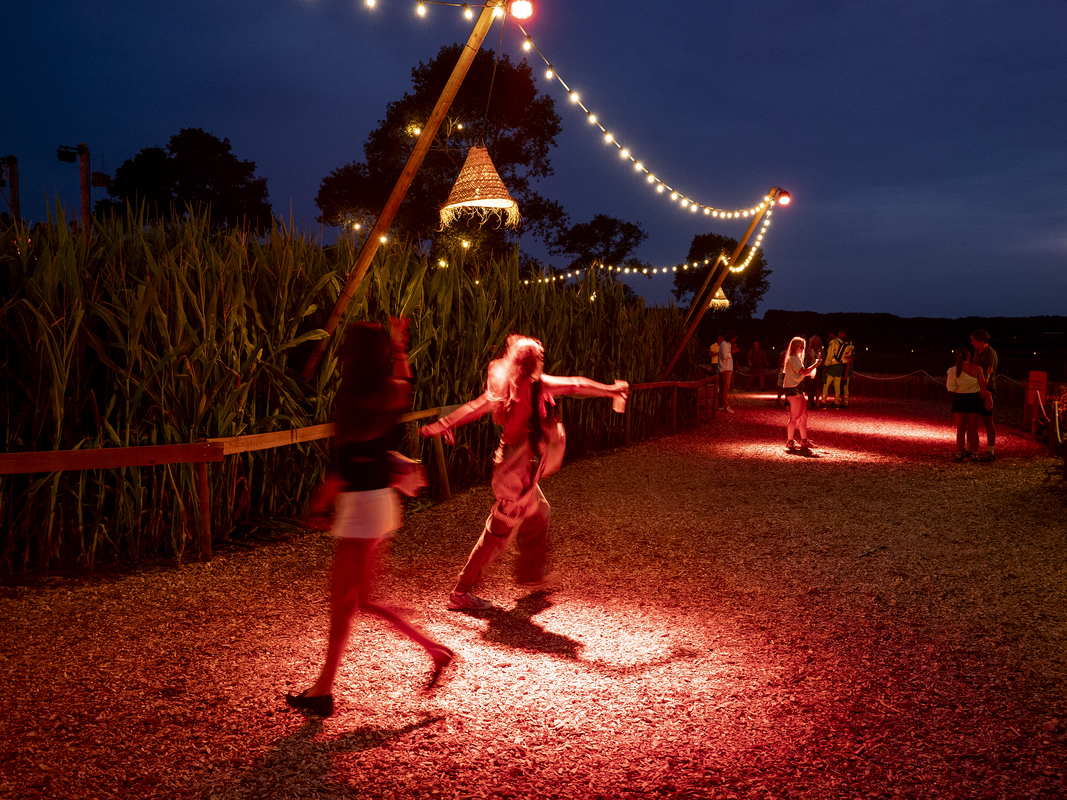
From July 31 to August 2, 2026, approximately 28,000 people gathered in the rural sunflower fields of Damme in Belgium at Campo Solar, a scenic music festival in the Flemish countryside. Enri Canaj went to the festival to see what happens at an outdoor celebration uniting thousands of strangers from different backgrounds.
“What made the festival particularly interesting to me was its setting — everything took place outdoors, surrounded by open fields and flowers,” said Canaj. There was a beautiful contrast between the openness of the landscape and the intimacy of people coming together. In that environment, the bar becomes more than a place to drink — it becomes a meeting point where people connect, celebrate and share a moment.”
John Kehoe’s, Dublin, Ireland
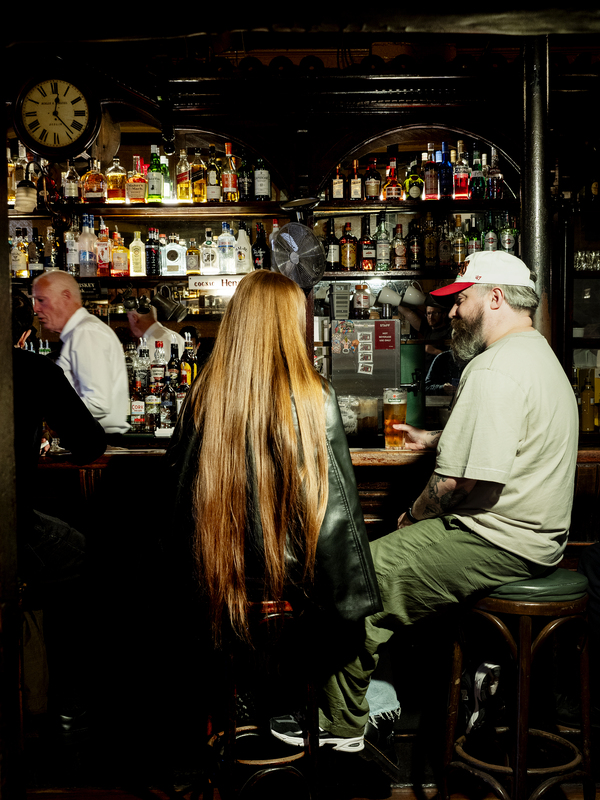
“A good puzzle would be to cross Dublin without passing a pub,” protagonist Leopold Bloom notes in James Joyce’s Ulysses. John Kehoe’s — or Kehoes — is a traditional Victorian heritage pub in Dublin, a paragon city of European pub culture. Canaj not only captures the pub’s unique decor and unspoilt mahogany wood, but the custom of coming together and enjoying a friend’s company.
“What interests me about bar culture is not only the people and the stories that happen there, but the feeling of being inside a bar,” Canaj adds. “There is something warm and intimate about the atmosphere — the light, the noise, the music, the conversations, the movement of people. You enter as an outsider, but you quickly feel part of something. As a photographer, I’m drawn to those moments when this atmosphere becomes visible: a gesture, a laugh, or two strangers sharing a drink.”
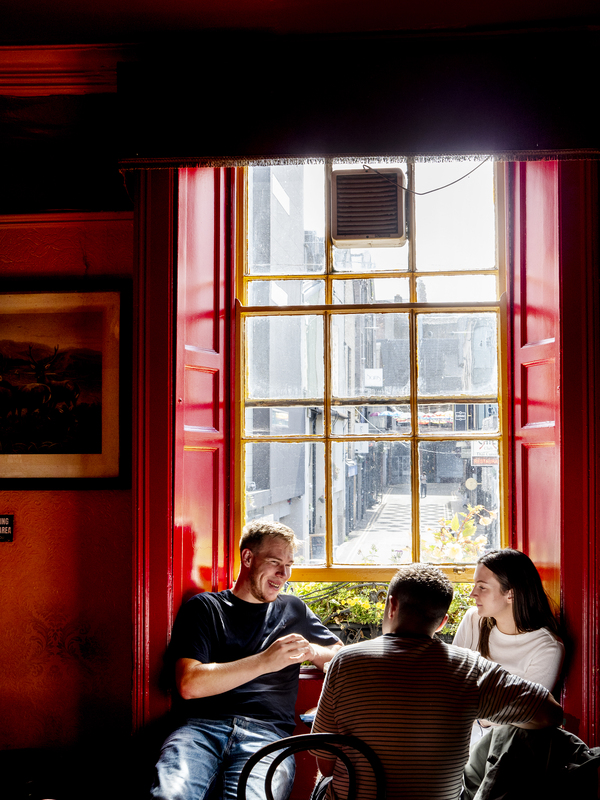
"You enter as an outsider, but quickly you feel part of something."
- Enri Canaj
Jérôme Sessini
U Mlynare, Prague, Czechia
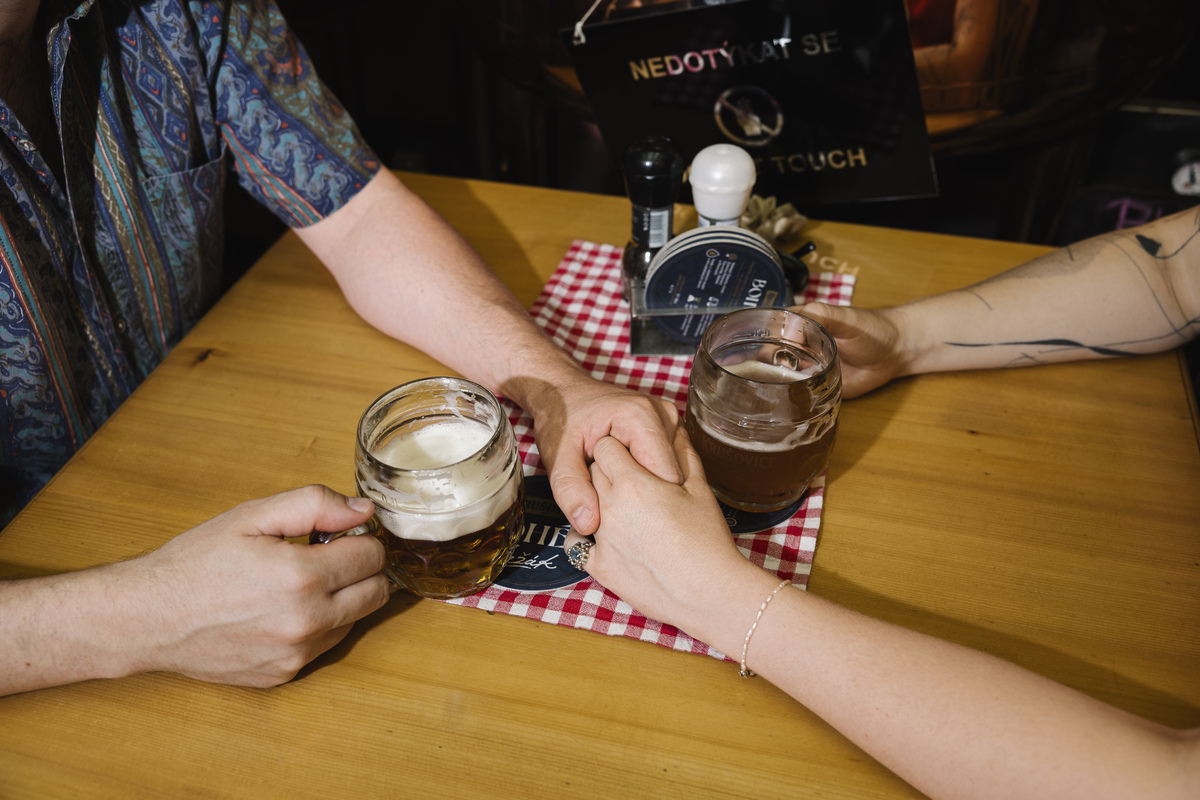
In the Malá Strana district of Prague, in the country that consumes the most beer per capita in the world, Jérôme Sessini stepped inside U Mlynare (The Miller’s). A small, authentic restaurant, they serve traditional Czech meals and tank beer, or tankové pivo — an unpasteurised, unfiltered lager that comes directly from the brewery, stored in sealed stainless steel tanks. Sessini considers how the space makes room for a quiet intimacy, acting almost as a second home.
“I grew up between the 1980s and 1990s between two very different cultures: part of my childhood and teenage years was spent in eastern France and the other part in southern Italy,” says Sessini. “In smaller towns, the bar was often the main place for social interaction and meeting people, […] it was also part of everyday life and of a town’s social fabric. Starting in the late 1990s, I witnessed the gradual decline of small cafés and bars. People increasingly stay at home, in front of a computer or their phones.
“That is probably why these assignments particularly interested me: beyond the beer and the place itself, I found in these bars something that I believe is essential to society — a space where people can come together, talk to one another, and simply share a moment.”
"I found in these bars something that I believe is essential to society.
"
- Jérôme Sessini
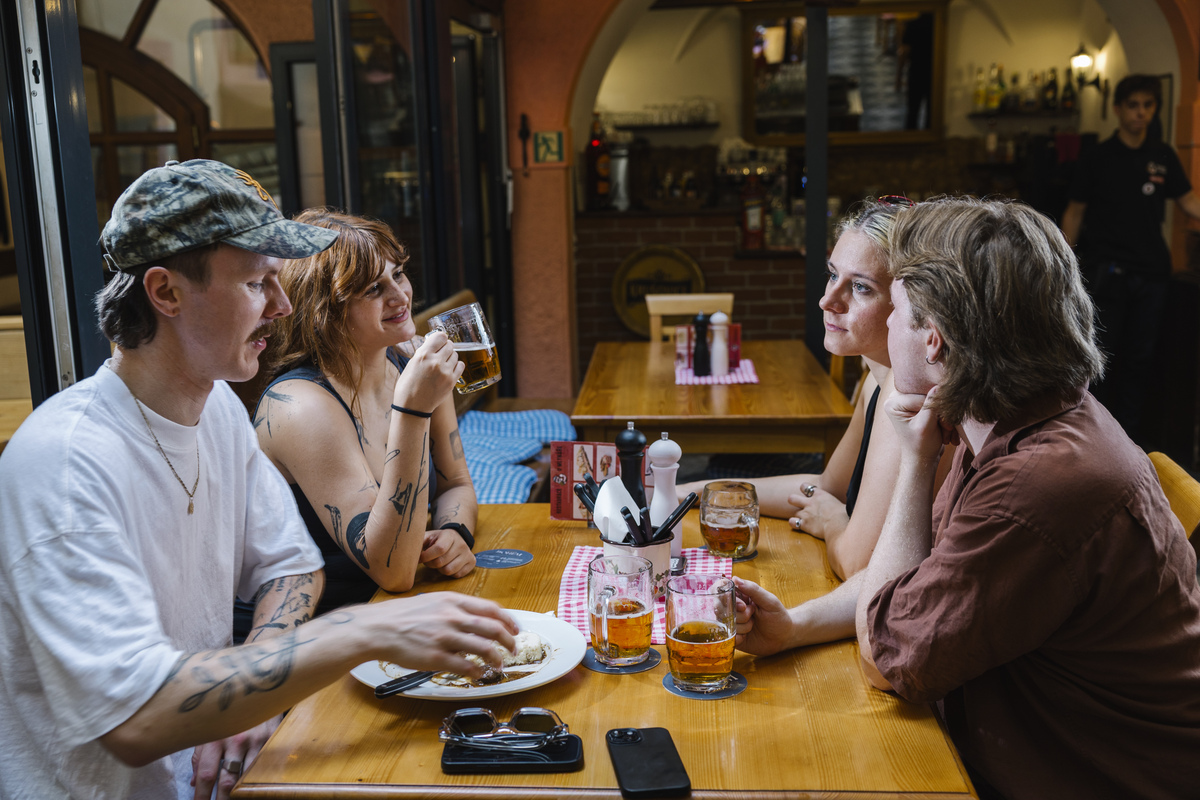
Rafał Milach
Food Hall Browary, Warsaw, Poland
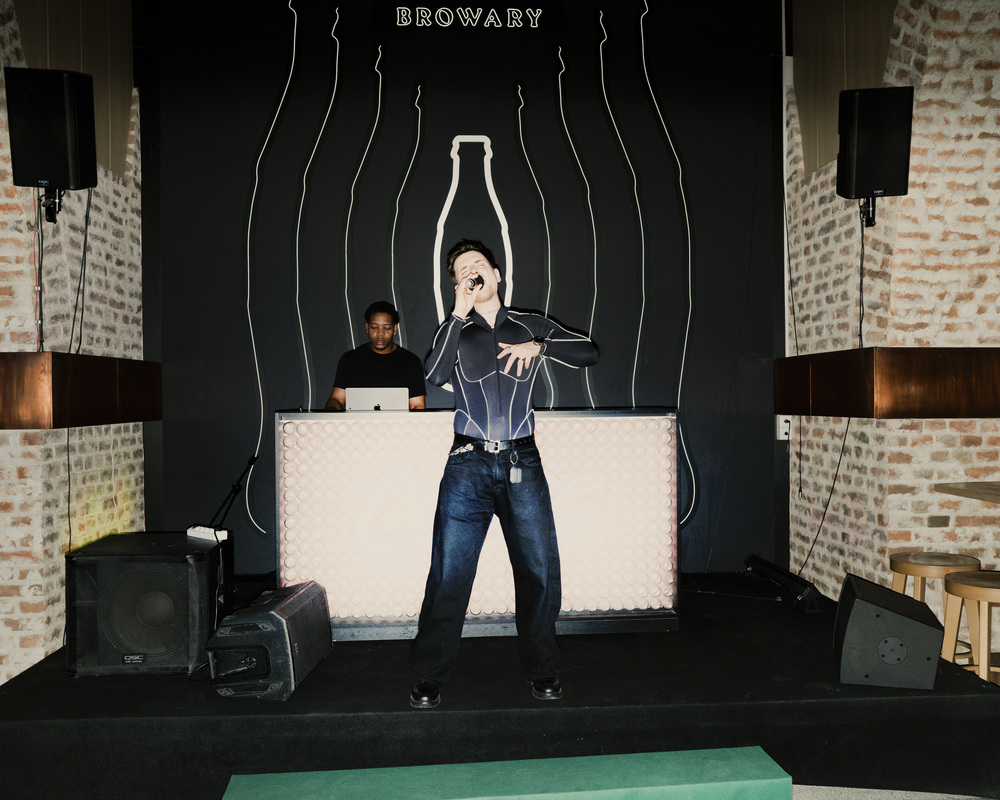
Food halls, says the historic Browary Warszawskie, were conceived as a “fight against boredom,” part of an unquenchable urban desire to have a vast range of choices. At Food Hall Browary, one of Browary Warszawskie’s dining venues, everything is at hand. Above all, the brewery insists, it is a place for social connection. Milach highlights Food Hall Browary’s upbeat, festive side, inviting us to pull up a chair at the table.
Emin Özmen
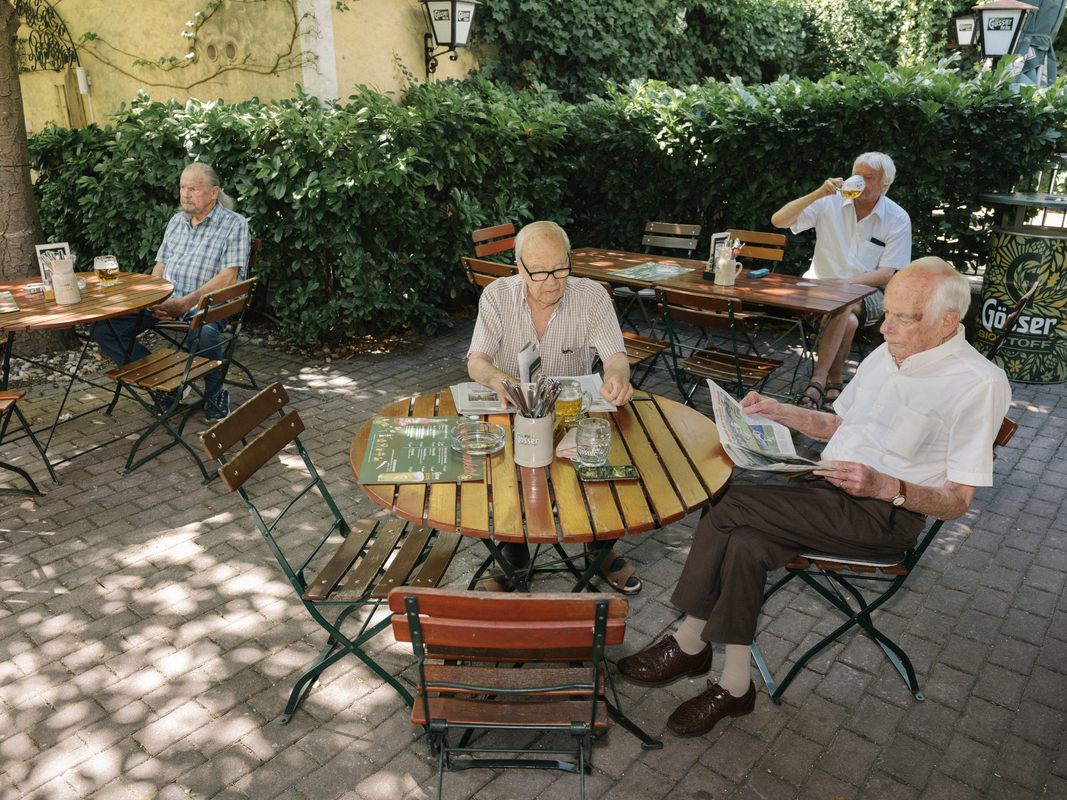
Gösser Bräu, Graz, Austria
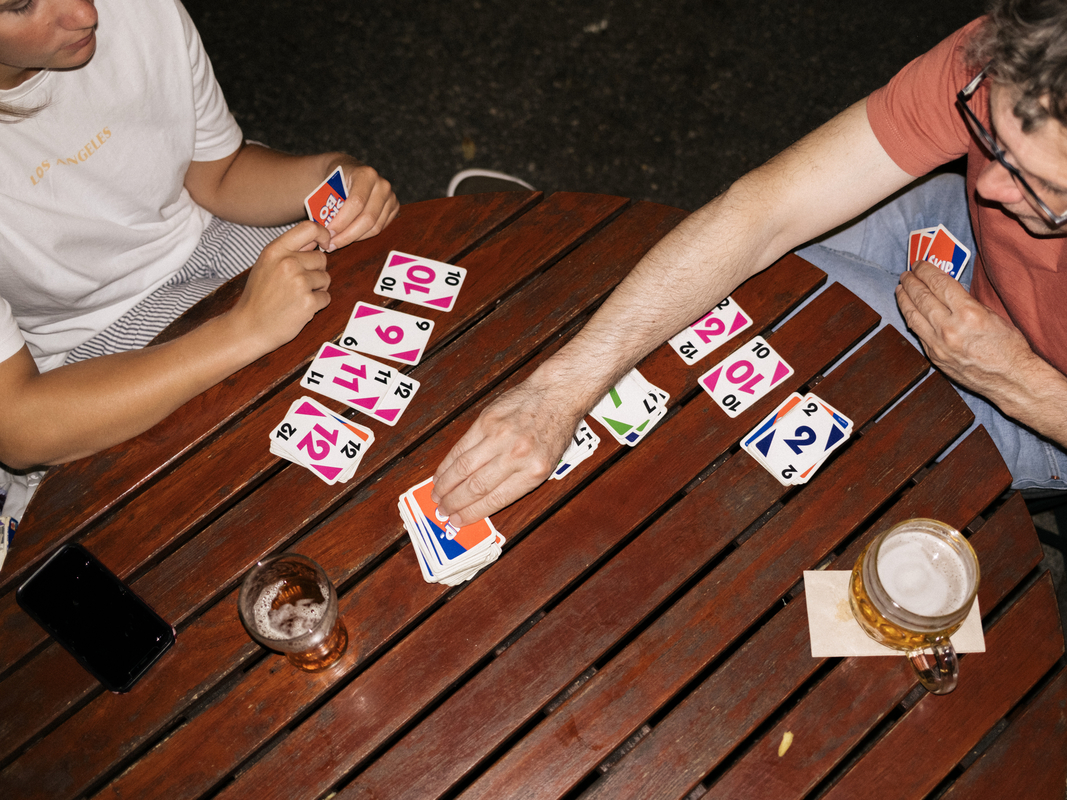
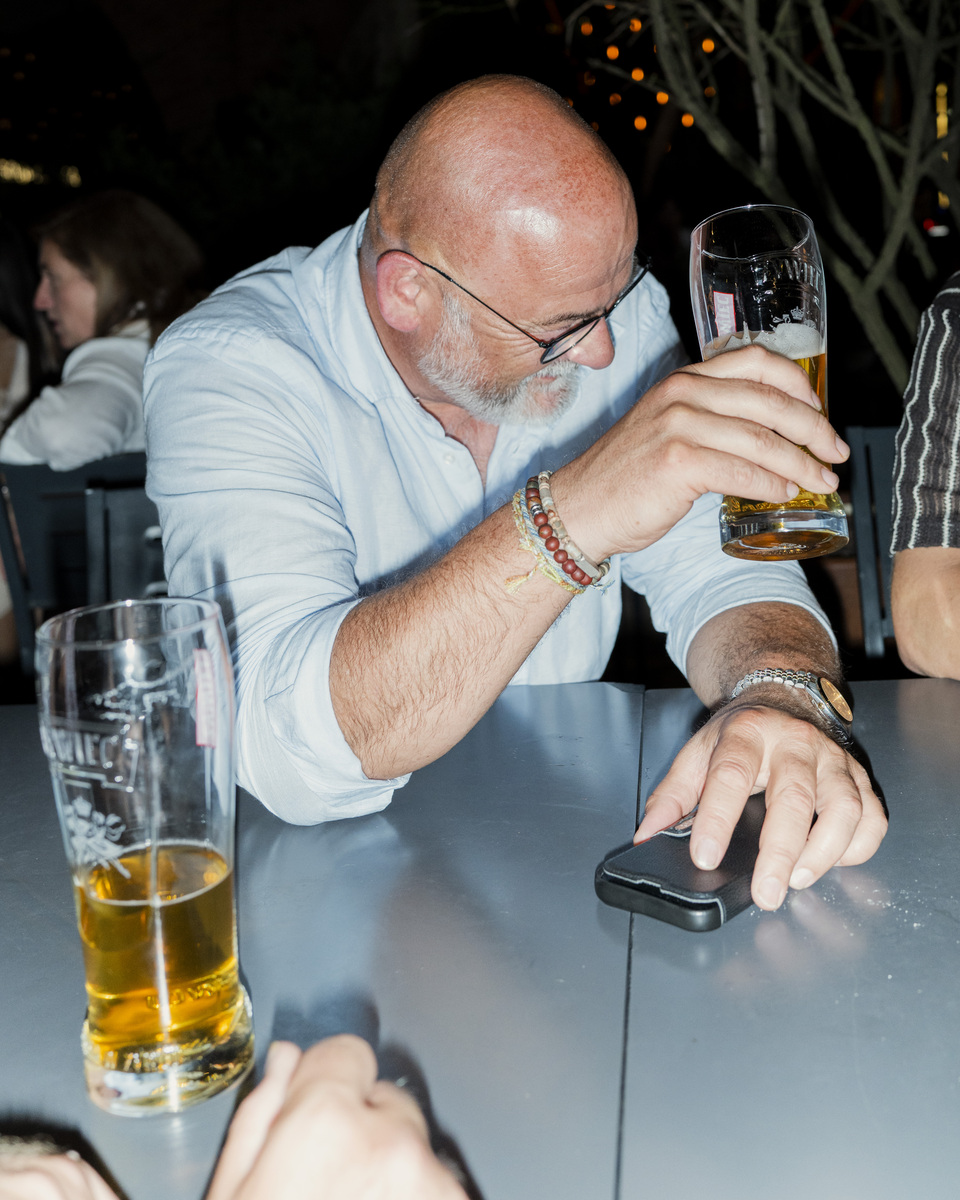
What has a bar table seen over the course of its existence? In Graz, Austria’s culinary capital and second-largest city, Emin Özmen photographed what happens behind the walls of Gösser Bräu, a rustic pub and restaurant equipped with a beer garden, where young people play cards on a well-frequented terrace table.
Lorenzo Meloni
I Vaccinari, Milan, Italy
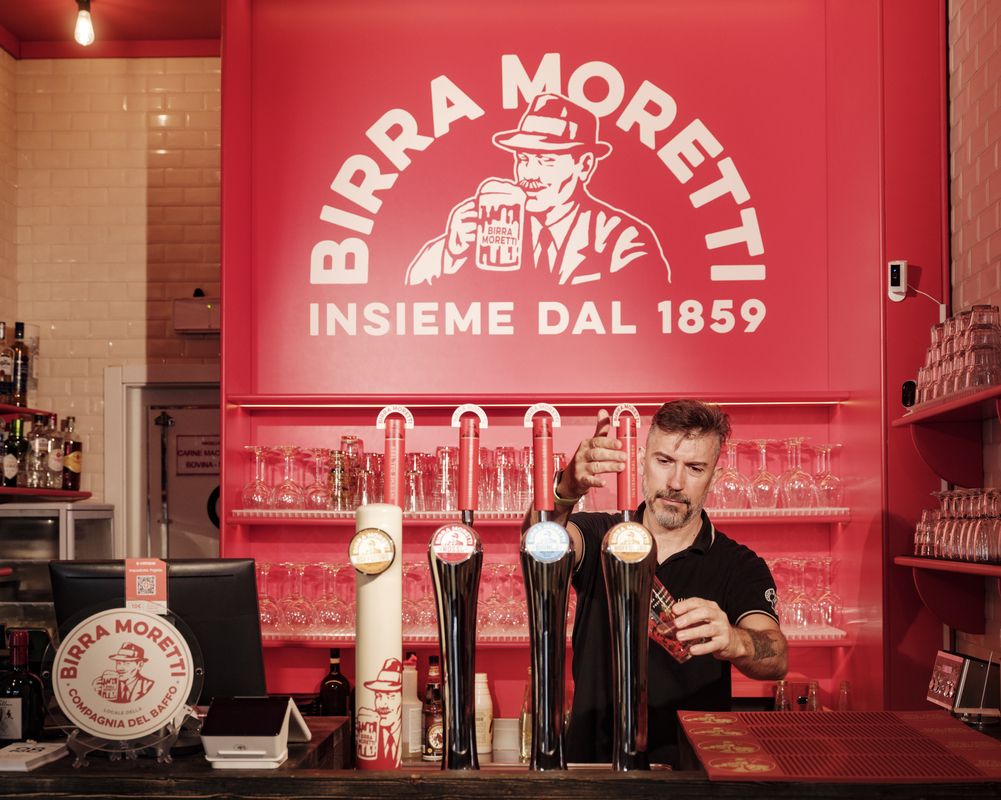
In 2020, Lorenzo Meloni went on a four-week road trip in northern Italy, documenting the effects of the Covid-19 pandemic, when social spaces were in lockdown. Revisiting Milan six years later, Meloni shows the value of public venues, not only as informal spaces for connection, but ones that uphold a sense of community resilience.
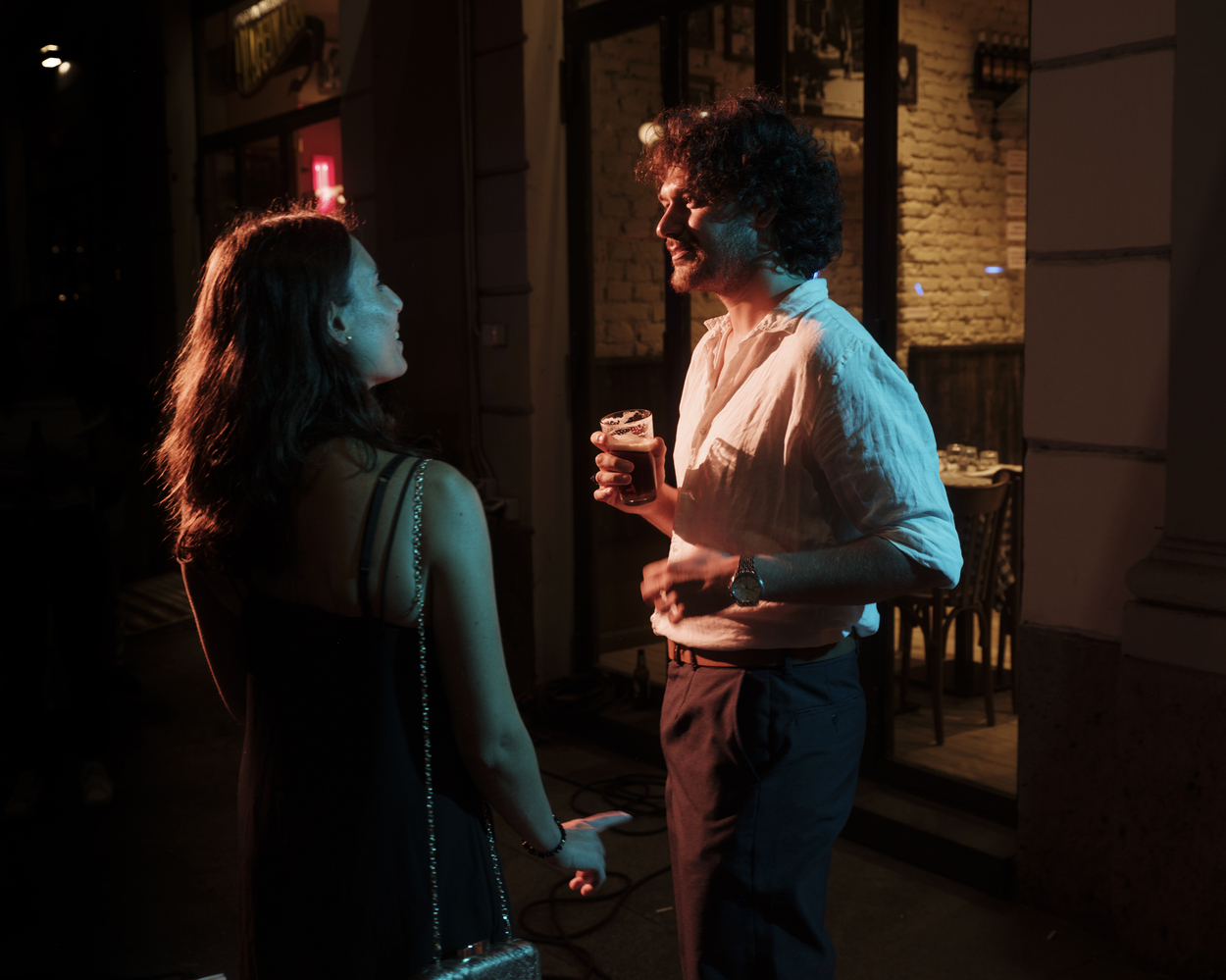
Steps away from the Arco della Pacea, I Vaccinari serves pinsa — a popular flatbread — and Moretti beer, bringing Roman style to Milan. Outside, Meloni — a Roman himself — photographed two bar-goers conversing on a summer evening under the street lamps.
Bieke Depoorter
Café Pieper in Amsterdam and Gieterij ‘t Swaentje in Rotterdam, Netherlands

In Amsterdam and Rotterdam, Bieke Depoorter walks us through traditional bruin cafés, known for their dark walls and wooden panels, instilling a welcoming, convivial mood. Attentive to moments of reflection and playfulness, Depoorter evokes what binds us to a place, and why we return.
Cristina Garcia Rodero
Bar Sidi, Madrid, Spain
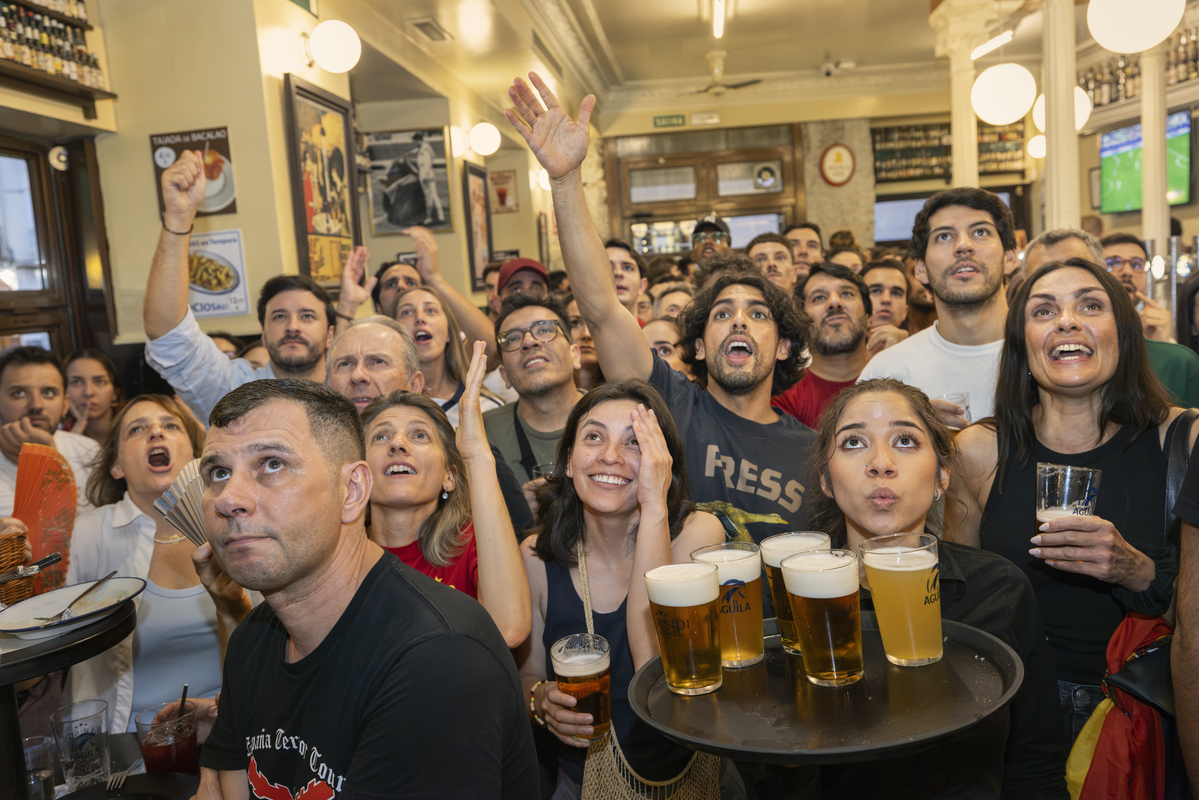
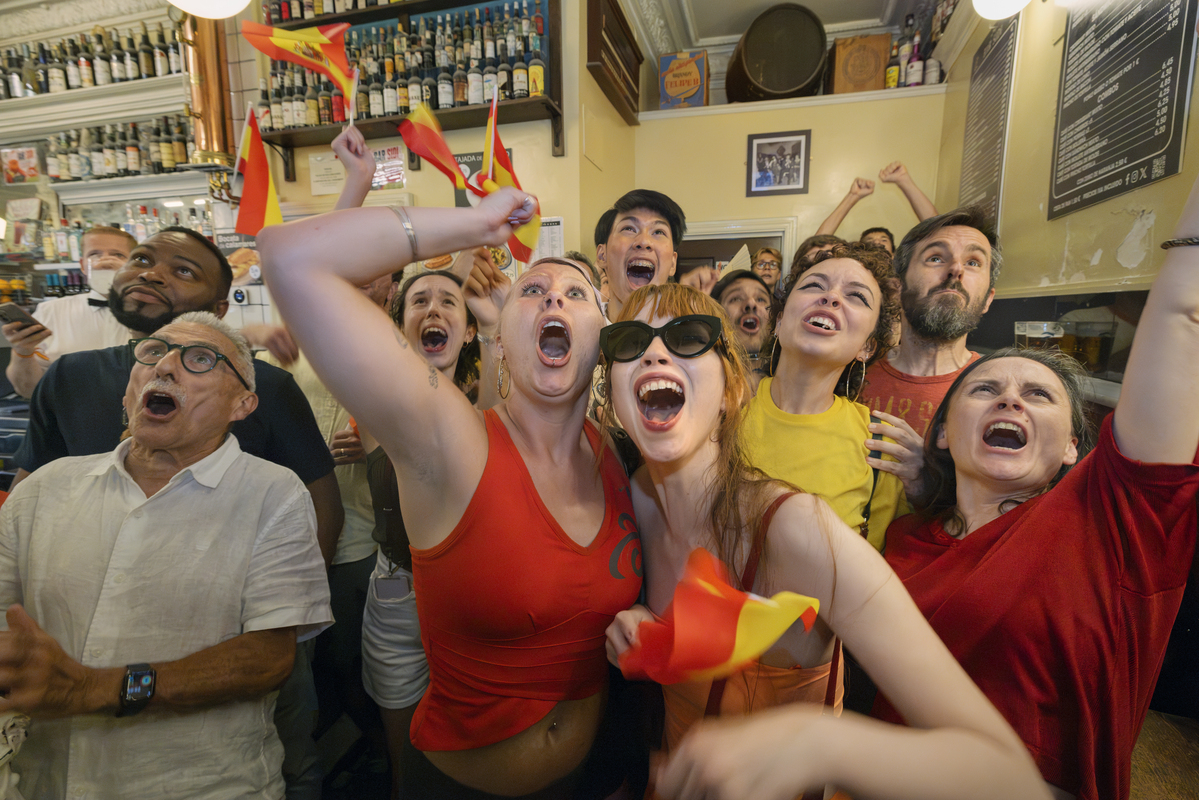
Cristina Garcia Rodero visited Madrid’s Bar Sidi during the 2026 Football World Cup as Spain was playing the quarter-final against Belgium. The bar was charged with excitement as Spain went on a historic World Cup run that would lead them to victory. Rodero’s work shows that bars are not just for socializing — they bring people together, young and old, for major events, making historic moments more memorable.
Europe’s Living Rooms revitalizes a practice from the cooperative’s earliest days: capturing moments in bars and cafés across Europe, from terraces in Paris to Roman piazzas. Today, a recent survey from HEINEKEN shows that 35% of travelers have visited a particular neighborhood specifically for a venue, and 77% said they visited a local pub, bar, café or taverna multiple times during their most recent European holiday, suggesting these hubs can influence the way we experience a place.
“The photos capture real life, not staged moments,” says Glenn Caton, President Europe at HEINEKEN. “They’re reminders that these places aren’t just venues, they’re part of people’s lives. In an increasingly digital world, these spaces still play an important role in fostering connection, supporting local communities and giving visitors a genuine experience of local culture.”
“This project resonated with us so strongly,” says Marine Mérindol, Chief Operating Officer (COO), Magnum Photos. “Magnum photographers have painted a portrait not just of places, but of the people who make them matter. A true understanding of Europe’s Living Rooms is earned by staying long enough to relate to them, and this is exactly what documentary photography can capture that other mediums can’t. It doesn’t just illustrate a place; it witnesses it.”
Please enjoy HEINEKEN brands responsibly and only share this article with those who are of legal drinking age.